Quebec City

Quebec City

What is the history of Quebec City?

Quebec City, or Ville de Québec in French, is the capital city of the province of Quebec in Canada. It is situated in the eastern part of the province along the St. Lawrence River and is known for its rich history, European charm, and stunning architecture.

The city’s historic district, Old Quebec (Vieux-Québec), is a UNESCO World Heritage site and features cobblestone streets, historic buildings, and fortifications dating back to the 17th century.

Within Old Quebec, notable attractions include the iconic Château Frontenac, a grand hotel with breathtaking views of the city and river, as well as Place Royale, the Petit-Champlain district, and the Citadelle of Quebec.

Quebec City

Quebec City

It is renowned for its festivals, including the Winter Carnival (Carnaval de Québec), one of the largest winter festivals in the world, celebrating winter sports, ice sculptures, and Quebecois culture. The city also offers a vibrant culinary scene, showcasing French-Canadian cuisine and numerous cafes, bistros, and restaurants.

Rich in history and culture, Quebec City serves as a hub for art, music, and heritage, attracting tourists from around the globe to explore its beauty and immerse themselves in its unique blend of European and North American influences.

It, located in the Canadian province of Quebec, has a rich and diverse history that spans centuries. Here’s an overview:

Early History:
  • Indigenous Settlements: Before the arrival of Europeans, the area was inhabited by various Indigenous peoples, notably the Huron-Wendat, the Iroquois, and the Algonquin.
European Exploration and Colonization:
  • Jacques Cartier: In 1534, French explorer Jacques Cartier arrived in the region, claiming it for France. He established a fort at the site of present-day Quebec City in 1535.
  • Samuel de Champlain: In 1608, Samuel de Champlain founded Quebec City, establishing it as a fur trading post and the capital of New France. The city’s strategic location along the St. Lawrence River contributed to its growth as a trading hub.
Colonial Period:
  • Conflict between France and England: It became a focal point during various conflicts between France and England for control over North America. The British captured Quebec City in 1629 but later returned it to France via the Treaty of Saint-Germain-en-Laye in 1632.
  • Battle of the Plains of Abraham: In 1759, during the Seven Years’ War, British forces, led by General James Wolfe, defeated the French under General Louis-Joseph de Montcalm on the Plains of Abraham, leading to the fall of Quebec City. This pivotal battle marked the end of French rule in Canada.
  • British Rule: Following the Treaty of Paris in 1763, which ended the Seven Years’ War, Quebec City and the rest of New France came under British control.
19th Century:
  • Constitutional Changes: After the American Revolution, many Loyalists (those loyal to the British Crown) settled in Quebec City and the surrounding areas. In 1791, the British Parliament passed the Constitutional Act, dividing Quebec into Upper and Lower Canada, with Quebec City as the capital of Lower Canada.
  • Political Unrest: Throughout the 19th century, tensions between English-speaking and French-speaking residents grew, leading to political unrest and calls for reform and representation.
Confederation and Modern Era:
  • Confederation: In 1867, Quebec City hosted the Quebec Conference, where discussions and agreements on Confederation took place. This resulted in the formation of the Dominion of Canada on July 1, 1867.
  • Cultural and Economic Development: Quebec City continued to grow as a cultural, economic, and political center. Efforts to preserve its historic sites, such as Old Quebec, led to its designation as a UNESCO World Heritage Site in 1985.
Contemporary Era:
  • Political Significance: Quebec City remains a significant political and cultural center within Quebec province, hosting important political events and cultural festivals.
  • Tourism and Economy: Its historic charm, fortified walls, and numerous landmarks attract millions of tourists each year. Additionally, industries like technology, tourism, and services contribute to the city’s economy.

Quebec City’s history is deeply intertwined with both French and British influences, contributing to its unique cultural heritage that remains an integral part of Canada’s history.

let’s to see video from our YouTube channel.

If you want to see more post, please click here.

 

Sunflower Stem

Sunflower Stem

SunFlower Stem under microscope

Observing a sunflower stem under a microscope can reveal fascinating details about its internal structure. Typically, the stem of a sunflower consists of various tissues arranged in a specific pattern.

SunFlower Stem

Under a microscope, you might observe:

  1. Epidermis: The outermost layer of cells that covers the stem. These cells help protect the inner tissues and regulate water loss,
  2. Cortex: Beneath the epidermis, you’ll find the cortex, a region composed of parenchyma cells that provide support and store nutrients,
  3. Vascular Bundles: These are scattered throughout the stem and are responsible for transporting water, nutrients, and sugars. They consist of xylem (responsible for water and mineral transport) and phloem (responsible for the transport of sugars produced in the leaves to other parts of the plant),
  4. Cambium: In dicot stems like sunflowers, you might find a layer of actively dividing cells called the cambium. This layer is responsible for secondary growth, leading to the formation of wood in trees,
  5. Pith: The central region of the stem consists of pith, which is made up of parenchyma cells and serves as a storage tissue.

Under higher magnification, you might also observe cell walls, cell organelles (such as chloroplasts in some cells), and other details that contribute to the stem’s function and structure.

To observe the sunflower stem under a microscope, you’ll need to carefully prepare a thin cross-section of the stem. This involves slicing a very thin piece of the stem and placing it on a microscope slide, adding a drop of water or a staining solution if necessary, and covering it with a cover slip before placing it under the microscope for observation.

Adjusting the magnification and focus will help in getting a clear view of the different structures within the stem.


Now, let’s to see the video from our YouTube channel:

https://youtu.be/ODAzBrtAJvE

You can find all posts for Microscope by clicking here.

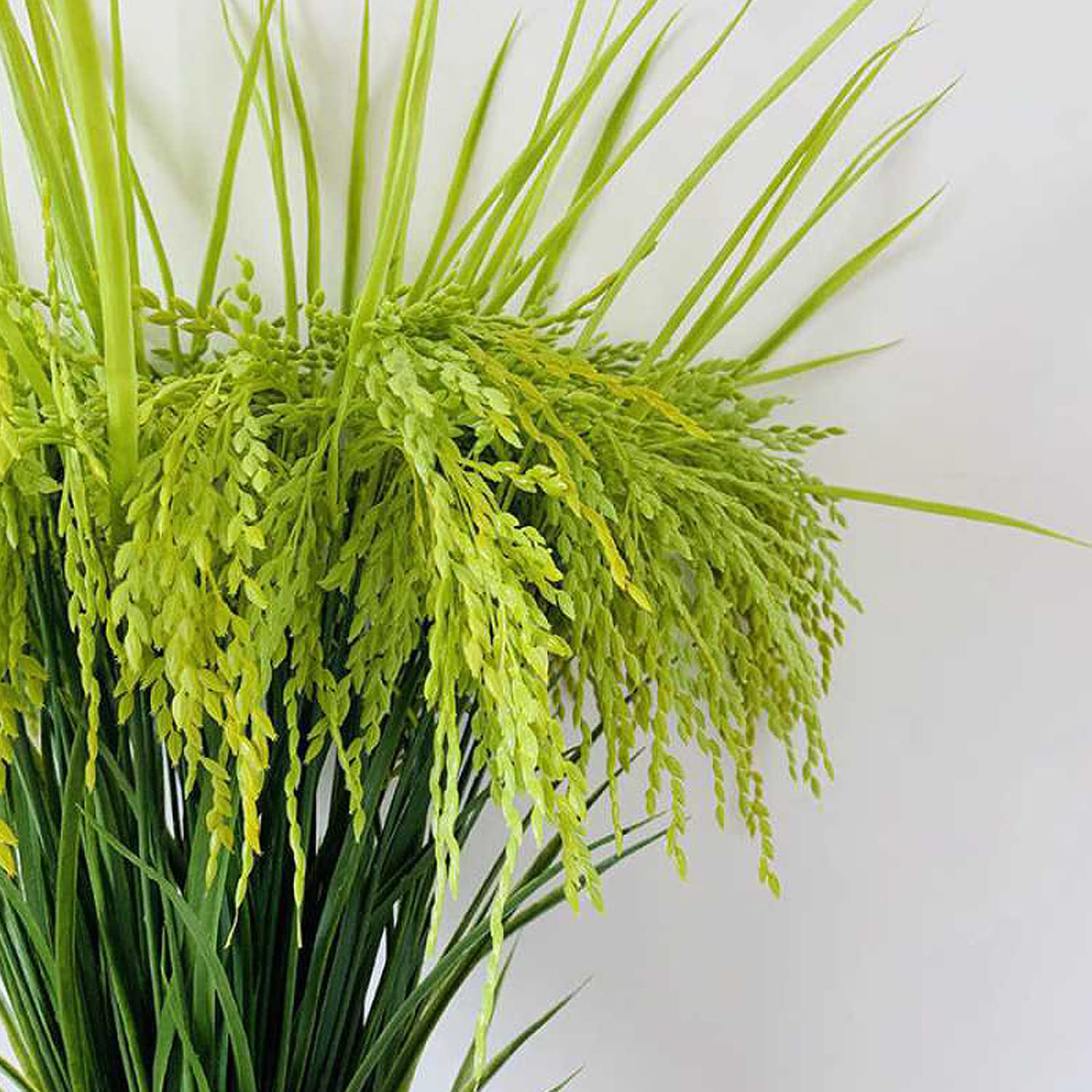
Rice Stem

Rice Stem

Rice stem under microscope

When observing a rice stem under a microscope, you can observe various structures and tissues that contribute to the overall plant function. Here are some of the key components and structures you might see:

rice stem

Epidermis:

The outer layer of cells covering the stem. It acts as a protective barrier against physical damage and pathogens.

Vascular bundles:

These are bundles of xylem and phloem tissues responsible for transporting water, nutrients, and sugars throughout the plant. Xylem transports water and minerals from the roots upwards, while phloem transports sugars produced in the leaves to other parts of the plant.

Xylem:

This tissue is composed of vessels and tracheids that transport water and dissolved minerals from the roots to the rest of the plant. It appears as elongated cells with various patterns.

Phloem:

Made up of sieve tubes and companion cells, the phloem transports organic nutrients (such as sugars) produced during photosynthesis to other parts of the plant. Under the microscope, phloem cells might appear as elongated cells with a different structure compared to xylem.

Parenchyma cells:

These are thin-walled, living cells that make up the ground tissue of the stem. They function in storage, photosynthesis, and support.

Collenchyma and sclerenchyma cells:

These provide mechanical support to the plant. Collenchyma cells have thicker cell walls and provide flexible support, while sclerenchyma cells have rigid, thick walls, and provide more structural support.

Meristematic tissues:

These are regions of actively dividing cells where growth occurs. In the stem, you might see the apical meristem (at the tip of the stem) or lateral meristems (responsible for secondary growth).

Under a microscope, the arrangement, shape, size, and patterns of these cells and tissues would be visible, allowing for a detailed study of the internal structure of a rice stem and its functionality. Staining techniques or specialized microscopy methods can enhance specific features or tissues for better observation and analysis.

Now, let’s to see the video from our YouTube channel:

You can find all posts for Microscope by clicking here.

3D Printing (Flash Man)

3D Printing (Flash Man)

3D Printing (Flash Man)

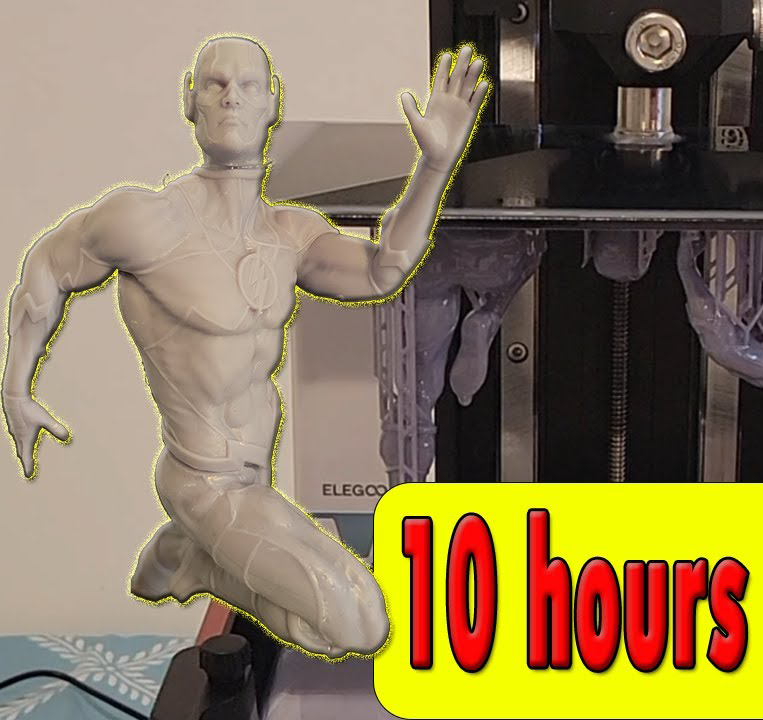
Flash Man is a character from the classic video game series “Mega Man” developed by Capcom. He is one of the Robot Masters created by the nefarious Dr. Wily. Flash Man made his first appearance as a boss character in “Mega Man 2,” which was released for the Nintendo Entertainment System (NES) in 1988.

Flash Man is known for his ability to manipulate time using his Time Stopper weapon. This weapon allows him to briefly freeze time, giving him an advantage during battles. In his stage, players navigate through various obstacles and enemies before facing Flash Man in a boss battle.

Defeating Flash Man grants Mega Man the Time Stopper ability, which can be used against other Robot Masters. Flash Man’s weakness is typically the “Metal Blade” weapon obtained from Metal Man in the game, making it easier for players to defeat him.

The character has become an iconic part of the Mega Man series, remembered for his time-based abilities and challenging boss fight.

Flash Man was printed at least for 10 hours.

Now, let’s to see the video from our YouTube channel:

You can find all learning for 3D Printing by clicking here.

MITRE ATT&CK

MITRE ATT&CK

MITRE ATT&CK

(Adversarial Tactics, Techniques, and Common Knowledge)

is a framework developed by MITRE Corporation, a not-for-profit organization dedicated to solving problems for a safer world. ATT&CK is a knowledge base that categorizes the tactics, techniques, and procedures (TTPs) used by adversaries or attackers during cyber intrusions.

The framework provides a comprehensive understanding of how cyber adversaries operate by organizing their behaviors into a matrix. This matrix consists of various tactics that represent high-level objectives an attacker may have (such as initial access, execution, persistence, privilege escalation, etc.) and techniques that represent specific methods or actions used to achieve those objectives.

Each technique is associated with real-world examples of how attackers have historically carried out cyber-attacks. The goal of ATT&CK is to assist organizations in improving their cyber defenses, threat detection, and response capabilities by mapping their security measures to the known tactics and techniques used by adversaries.

It’s widely used in cybersecurity for several purposes, including threat intelligence, red teaming, blue teaming, security assessments, and improving security posture by identifying and mitigating potential attack vectors based on known adversary behaviors. The framework is continuously updated and expanded to reflect the evolving landscape of cyber threats and attack methodologies.


Here are some examples of techniques related to Initial Access in the MITRE ATT&CK framework:

Spear phishing Attachment (T1566.001):

Attackers send tailored emails with malicious attachments to trick users into opening them, leading to the execution of malicious code.

Spear phishing Link (T1566.002):

Attackers send tailored emails containing links to malicious websites or resources to trick users into clicking, leading to exploitation or malware installation.

Valid Accounts (T1078):

Attackers use previously obtained credentials, such as stolen or purchased credentials, to gain unauthorized access.

External Remote Services (T1133):

Attackers exploit externally accessible services, such as VPNs or web services, to gain initial access to a network.

Exploit Public-Facing Application (T1190):

Attackers exploit vulnerabilities in public-facing applications, such as web servers, to gain access to the targeted network.

Drive-by Compromise (T1189):

Attackers compromise a legitimate website to host and deliver malicious content to visitors’ systems.

Phishing (T1566):

Attackers send deceptive communications (email, SMS, etc.) to trick individuals into divulging sensitive information or performing actions that compromise security.

Supply Chain Compromise (T1195):

Attackers target suppliers or vendors to gain access to their networks, which in turn could provide access to the targeted network.


These are just a few examples; the MITRE ATT&CK framework covers a wide array of tactics and techniques used by adversaries during different stages of a cyberattack. Each technique may have various sub-techniques and mitigations associated with it, providing a comprehensive understanding of potential threats and appropriate defenses.

You can find other learning for Security by clicking here.