The bird that is reputed to be the loudest bird is the African gray parrot.
African Grey Parrots are known for their exceptional talking and mimicry abilities. They can imitate human speech, sounds, and even laughter, making them a popular pet bird species.
Their intelligence and social nature also contributes to their noise level, as they like to communicate with their owners and their surroundings. Other noisy bird species include the Cockatoo, Macaw, and Amazon parrot.
African Grey Parrots are highly social birds that form strong bonds with their owners. They are playful, curious, and intelligent birds that enjoy interacting with their surroundings and engaging in various activities.
They are also known for their independent streak and can become destructive if they get bored or neglected. It is important for their owners to provide them with plenty of mental stimulation and physical exercise to keep them happy and healthy.
African Grey Parrots are also very social birds and enjoy the company of their own kind and their human caretakers. They are affectionate and bond well with their owners, often developing a close relationship and exhibiting loyal behavior.
The African Grey Parrot is native to the rainforests of West and Central Africa. They are typically in countries such as Ivory Coast, Ghana, and Cameroon, where they live in flocks in the tall trees of the dense forest.
These parrots are on a variety of foods including nuts, seeds, and fruits, and are known for their distinctive grey feathers and red tail feathers. The African Grey Parrot is widely regarded as one of the most intelligent bird species and is a popular pet bird due to its ability to imitate human speech and sounds.
African Grey Parrots have a lifespan of 40 to 60 years in captivity with proper care. In the wild, their lifespan is typically shorter due to factors such as predation and disease. These birds have a long lifespan and require a long-term commitment from their owners.
They require a nutritious diet, regular exercise, and plenty of mental stimulation to maintain their health and wellbeing. It is also important to provide them with a spacious cage or aviary and to give them plenty of opportunities to interact with their owners and their surroundings to help prevent boredom and destructive behavior. By providing proper care and attention, African Grey Parrots can live long and happy lives.
Cockatiels can enjoy a variety of nuts as part of their diet, but it’s important to offer them in moderation since nuts are high in fat. Here are some of the best nuts for cockatiels:
Almonds:
These nuts are a useful source of healthy fats and protein. Ensure they are unsalted and preferably raw, salted, or roasted almonds can be harmful to your bird.
Walnuts:
These nuts are another excellent source of healthy fats and protein. Like almonds, they are unsalted and raw.
Pecans:
These nuts are a bit softer than almonds and walnuts, which can be easier for cockatiels to crack open.
Brazil Nuts:
These are rich in selenium, which is essential for cockatiels. However, due to their high selenium content, they feed them sparingly.
Hazelnuts:
These nuts can be given occasionally. They are rich in nutrients but should also be provided in moderation.
Macadamia Nuts:
These are high in fat and should be fed sparingly. Some experts even recommend avoiding them entirely due to potential toxicity.
When offering nuts to your cockatiel, always ensure they are unsalted and not coated in any flavorings or additives.
Also, consider chopping or breaking the nuts into smaller pieces to make them easier for your bird to eat.
Nuts should be part of a balanced diet, which includes a variety of fresh fruits, vegetables, and high-quality pellets specifically formulated for cockatiels.
Remember to monitor your cockatiel’s weight and adjust its diet accordingly to prevent obesity.
Consult with an avian veterinarian for specific dietary recommendations for your pet.
If you want to know more about cockatiels, click here.
Cockatiel is a species of small parrot that is native to Australia. but the question is: Who is Cockatiel bird? They are one of the most popular pet birds in the world due to their friendly and sociable nature, easy care requirements, and low cost.
Cockatiels are also known for their distinctive crests of feathers on their heads that can be raised or lowered, and for their unique whistle and call sounds. They are available in a range of colors, including grey, yellow, white, and orange.
The cockatiel (Nymphicus hollandicus) is a small parrot species that is native to Australia. They are known for their distinctive crest on top of their heads, which can be raised and lowered to display their emotions. Cockatiels are popular pets around the world due to their friendly and social nature.
Cockatiels are known for their charming personalities and ability to mimic sounds and even speak some words and phrases. They come in a variety of color mutations, with the most common being the gray cockatiel with yellow crest and face. They are relatively easy to care for and can make wonderful companions for those who are willing to provide them with attention, proper nutrition, and a safe environment.
Cockatiels are known for their playful and intelligent behavior, and many people enjoy their ability to mimic sounds and even speak a few words or phrases. They can be great companions for those who are willing to invest time and effort in their care and socialization.
If you want to know more about cockatiels, click here.
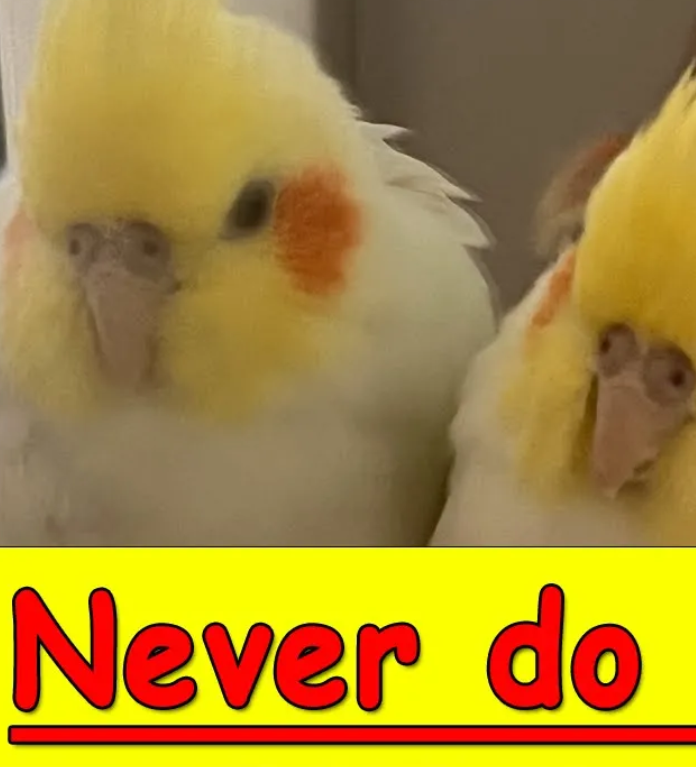
If you like your bird, Never do these Ten tips with your cockatiel.
1. Don’t keep your cockatiel in a small cage.
Cockatiels are active birds and require enough space to move around and stretch their wings. Keeping them in a small cage
can cause stress, depression and other health issues.
2. Don’t ignore your cockatiel.
Cockatiels are social birds and require attention and interaction from their owners. Neglecting them can lead to behavioral problems and even depression.
3. Don’t force your cockatiel to do something they don’t want to.
Cockatiels are intelligent creatures and have their own preferences. Forcing them to do something they don’t want to do can cause stress and can even lead to physical harm.
4. Don’t feed your cockatiel an unhealthy diet.
Cockatiels require a well-balanced diet that includes fresh fruits, vegetables and a high-quality pellet or seed mix. Feeding them a diet that’s high in fat or sugar can lead to obesity and other health problems.
5. Don’t expose your cockatiel to toxic fumes or chemicals.
Cockatiels have sensitive respiratory systems and exposure to toxic fumes or chemicals can be harmful or even fatal. Keep your cockatiel away from areas where you use chemicals or strong cleaning products and avoid smoking near them.
6. Don’t clip their wings improperly.
If you choose to clip your cockatiels wings. Make sure that you do it properly or have it done by a professional. Improper wing clipping can cause injury or even prevent the bird from flying altogether.
7. Don’t leave your cockatiel in direct sunlight.
Cockatiels are sensitive to heat and can easily overheat if left in direct sunlight for too long. Make sure that they have access to shade and plenty of fresh water on hot days.
8. Don’t use abrasive cleaning products on their cage.
When cleaning your cockatiels cage. Avoid using abrasive cleaning products as they can be harmful to the birds. Sensitive respiratory system. Instead, use mild soap and water or a bird safe cleaning product.
9. Don’t introduce a new bird without proper quarantine.
If you’re introducing a new cockatiel to your household, make sure to quarantine the new bird for a few weeks before introducing it to your existing birds. This can help prevent the spread of diseases and ensure that the new bird is healthy.
10. Don’t use harsh training methods.
Cockatiels are intelligent birds and can be trained, but it’s important to use positive reinforcement training methods using harsh training methods or punishment can cause fear and aggression in your bird and can damage your bond with them.
Be make sure to Never do these tips with your Cockatiel.
If you want to know more about cockatiels, click here.