
by netvitalca@gmail.com | Nov 26, 2023 | Network Security
MITRE ATT&CK

(Adversarial Tactics, Techniques, and Common Knowledge)
is a framework developed by MITRE Corporation, a not-for-profit organization dedicated to solving problems for a safer world. ATT&CK is a knowledge base that categorizes the tactics, techniques, and procedures (TTPs) used by adversaries or attackers during cyber intrusions.
The framework provides a comprehensive understanding of how cyber adversaries operate by organizing their behaviors into a matrix. This matrix consists of various tactics that represent high-level objectives an attacker may have (such as initial access, execution, persistence, privilege escalation, etc.) and techniques that represent specific methods or actions used to achieve those objectives.
Each technique is associated with real-world examples of how attackers have historically carried out cyber-attacks. The goal of ATT&CK is to assist organizations in improving their cyber defenses, threat detection, and response capabilities by mapping their security measures to the known tactics and techniques used by adversaries.
It’s widely used in cybersecurity for several purposes, including threat intelligence, red teaming, blue teaming, security assessments, and improving security posture by identifying and mitigating potential attack vectors based on known adversary behaviors. The framework is continuously updated and expanded to reflect the evolving landscape of cyber threats and attack methodologies.
Here are some examples of techniques related to Initial Access in the MITRE ATT&CK framework:
Spear phishing Attachment (T1566.001):
Attackers send tailored emails with malicious attachments to trick users into opening them, leading to the execution of malicious code.
Spear phishing Link (T1566.002):
Attackers send tailored emails containing links to malicious websites or resources to trick users into clicking, leading to exploitation or malware installation.
Valid Accounts (T1078):
Attackers use previously obtained credentials, such as stolen or purchased credentials, to gain unauthorized access.
External Remote Services (T1133):
Attackers exploit externally accessible services, such as VPNs or web services, to gain initial access to a network.
Exploit Public-Facing Application (T1190):
Attackers exploit vulnerabilities in public-facing applications, such as web servers, to gain access to the targeted network.
Drive-by Compromise (T1189):
Attackers compromise a legitimate website to host and deliver malicious content to visitors’ systems.
Phishing (T1566):
Attackers send deceptive communications (email, SMS, etc.) to trick individuals into divulging sensitive information or performing actions that compromise security.
Supply Chain Compromise (T1195):
Attackers target suppliers or vendors to gain access to their networks, which in turn could provide access to the targeted network.
These are just a few examples; the MITRE ATT&CK framework covers a wide array of tactics and techniques used by adversaries during different stages of a cyberattack. Each technique may have various sub-techniques and mitigations associated with it, providing a comprehensive understanding of potential threats and appropriate defenses.

by netvitalca@gmail.com | Nov 17, 2023 | Network Security
Sample Exams of Cybersecurity
In these series we have some “Sample Exams of Cybersecurity”, “Practice Cybersecurity Examinations”, “Cybersecurity Test Previews” and “Mock Cybersecurity Tests”
McCumber CUBE: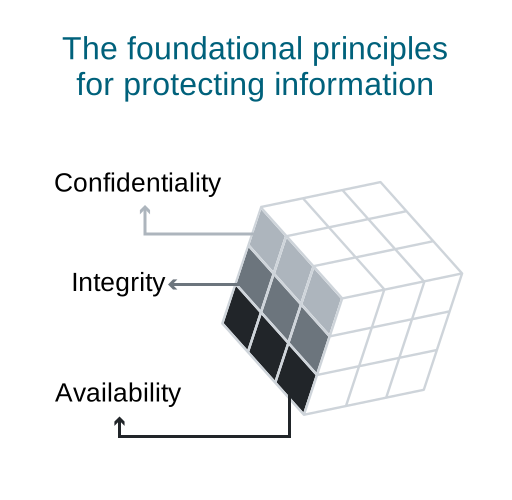
This could refer to a cybersecurity risk management framework developed by John McCumber, known as the McCumber Cube. It provides a structured way of understanding and managing security risks within an organization by considering three dimensions: confidentiality, integrity, and availability (often referred to as the CIA triad).
McCumber diagram:
In software engineering, the McCumber diagram is a graphical representation used to depict various dimensions of security in a system. It can display information regarding security attributes, vulnerabilities, threats, and countermeasures.
McCumber’s model or theories:
John McCumber is known for his contributions to cybersecurity and philosophy. He has written about the intersection of philosophy and technology, exploring the ethical and moral aspects of information security.
Cyberwarfare:
Cyberwarfare refers to the use of digital attacks, hacking, and other technological means to disrupt, damage, or gain unauthorized access to computer systems, networks, or information. The purpose of cyberwarfare can vary significantly based on the objectives of the parties involved. Here are some primary purposes or objectives associated with cyberwarfare:
National Security and Defense: Nations engage in cyberwarfare to protect their national security interests. This includes defending against cyber-attacks from other countries, safeguarding critical infrastructure (such as power grids, financial systems, and communication networks), and ensuring the security of military systems.
Espionage and Intelligence Gathering: Cyberwarfare is used for espionage purposes, allowing nations to gather intelligence on other countries, including government activities, military strategies, economic data, and technological advancements. This information can be used for strategic advantage or to stay informed about potential threats.
Political Influence and Manipulation: Some cyber operations aim to influence political processes, public opinion, or elections in other countries. This can involve spreading misinformation, manipulating social media, or breaching sensitive data to sway public sentiment or disrupt the political landscape.
Economic Warfare: Cyber-attacks can be used to sabotage or gain access to economic assets, trade secrets, intellectual property, or financial systems of other countries or corporations. Such attacks can cause significant economic damage or provide economic advantages to the attacking entity.
Military Operations and Warfare: Cyber capabilities are increasingly integrated into military strategies. They can be used to disrupt or disable enemy communication systems, command-and-control infrastructure, or weapon systems, creating advantages in traditional warfare scenarios.
Deterrence and Posturing: Nations may engage in cyber operations to highlight their capabilities, act as a deterrent against potential adversaries, or demonstrate their preparedness in the cyber domain. This serves to dissuade others from launching cyber-attacks or to signal the ability to retaliate effectively.
Non-state Actors and Ideological Motives: Some cyber-attacks are carried out by non-state actors, such as hacker groups or cybercriminals, for ideological reasons, financial gain, or to promote a specific agenda. These attacks might not be linked to state-sponsored cyberwarfare but can still cause significant disruptions.

It’s important to note that the landscape of cyberwarfare is complex and constantly evolving. Attribution of attacks, distinguishing between state and non-state actors, and the interconnected nature of cyberspace pose significant challenges in understanding and responding to cyber threats effectively. As technology advances, the purposes and methods of cyberwarfare will continue to evolve, requiring ongoing vigilance and adaptation in defensive and offensive strategies.
by netvitalca@gmail.com | Nov 6, 2023 | Network Security
Sample Exams of Cybersecurity
In these series we have some “Sample Exams of Cybersecurity”, “Practice Cybersecurity Examinations”, “Cybersecurity Test Previews” and “Mock Cybersecurity Tests”
Type of Attack:
1. Hacktivists:
These are individuals or groups who engage in hacking activities to promote a social or political agenda. Their goal is to raise awareness or effect change through their actions.
2. Cybercriminals:
Cybercriminals are motivated by financial gain. They may engage in activities like stealing personal information, credit card data, or conducting ransomware attacks to demand money from victims.
3. Nation-State Actors:
Governments and state-sponsored groups conduct cyber-espionage and cyber-attacks to gain a competitive advantage, steal sensitive information, or disrupt the infrastructure of other nations.
4. Insiders:
Insiders are individuals within an organization who misuse their authorized access to commit cybercrimes. They can be current or former employees, contractors, or business partners.
5. Script Kiddies:
These are individuals with limited technical skills who use pre-written scripts or tools to launch attacks. They often do it for the thrill rather than any specific goal.
6. Organized Crime Groups:
Some cybercriminals operate as part of organized crime networks. They may engage in activities like credit card fraud, identity theft, or cyber-extortion.
7. Phishers:
Phishers use social engineering techniques to trick individuals into revealing sensitive information, such as usernames, passwords, and financial data. They often send fraudulent emails or messages that are from legitimate sources.
8. Malware Authors:
Individuals who create and distribute malicious software, such as viruses, Trojans, and ransomware. Their goal is to infect computers and steal data or disrupt operations.
9. Advanced Persistent Threat (APT) Actors:
APT groups are typically nation-state or highly skilled attackers who use sophisticated, long-term attacks to infiltrate and maintain access to a target network. Their primary goals are espionage or data theft.
10. Hackers for Hire:
These are individuals or groups that offer hacking services to the highest bidder. They can be hired for various purposes, including corporate espionage, data theft, or taking down websites.
11. Data Brokers:
Data brokers gather, compile, and sell personal information and data obtained from various sources. While not directly engaging in hacking, their activities can indirectly support cybercrime by providing stolen data to other attackers.
12. Extortionists:
Extortionists threaten to expose sensitive information or launch attacks on a target unless a ransom is paid. Ransomware attacks are a common method used by extortionists.
13. Cybersecurity Researchers (Ethical Hackers):
While not attackers in the malicious sense, ethical hackers, or white hat hackers, actively seek vulnerabilities in systems and networks to help organizations strengthen their security.
14. Unintentional Threats:
Sometimes, individuals may inadvertently pose a security threat through their actions, such as falling victim to phishing attacks or using weak passwords. They are not malicious attackers but can inadvertently compromise security.
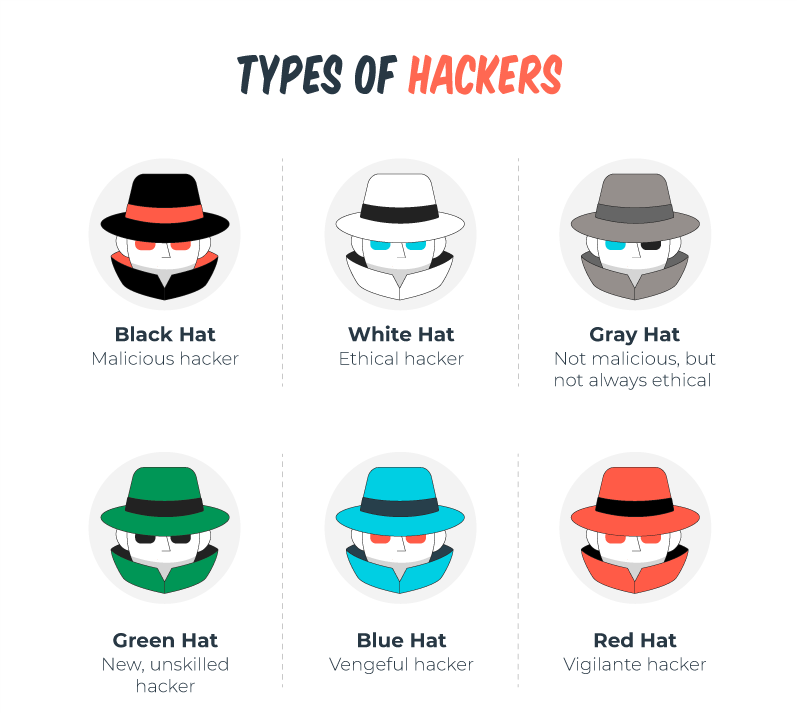
What Color Is My Hat of Attackers on cyber security?
White Hat:
White hat hackers are ethical hackers who work to identify and fix security vulnerabilities in systems. They are often employed by organizations to conduct penetration testing and security assessments to improve security.
Black Hat:
Black hat hackers are malicious hackers who engage in cybercriminal activities, such as hacking for financial gain, stealing sensitive data, or causing harm to computer systems and networks.
Gray Hat:
Gray hat hackers fall somewhere in between white hat and black hat hackers. They may discover and disclose security vulnerabilities without authorization but without malicious intent. However, their actions may still be legally questionable.
Red Team:
A red team is a group of skilled professionals who simulate cyberattacks to test the security of an organization’s systems. They can be either internal or external to the organization.
Blue Team:
Blue team refers to the defenders of a network or system. They work to prevent and mitigate cyberattacks and respond to security incidents.
by netvitalca@gmail.com | Nov 6, 2023 | Network Security
Sample Exams of Cybersecurity
In these series we have some “Sample Exams of Cybersecurity”, “Practice Cybersecurity Examinations”, “Cybersecurity Test Previews” and “Mock Cybersecurity Tests”

by netvitalca@gmail.com | Nov 6, 2023 | Network Security
Sample Exams of Cybersecurity
In these series we have some “Sample Exams of Cybersecurity”, “Practice Cybersecurity Examinations”, “Cybersecurity Test Previews” and “Mock Cybersecurity Tests”
What organizations need to invest in improved security practices?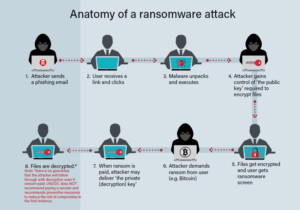
- investing in cybersecurity training for all staff so that they are aware of and able to spot a cyber attack
- enforcing two factor authentication for employees accessing files and applications that contain sensitive data
- maintaining log files and ongoing monitoring to identify anomalous behavior that might indicate a data breach
- storing the passwords of customers using a combination of salting and robust hashing algorithms
- separating cloud-based resources from the public Internet into an isolated private network segment
- granting employees access to personal data and internal systems only via a secure VPN connection.
Data Breach:
-
- What was taken? Personal information, financial data, or sensitive company data.
- Exploits: Typically involve phishing attacks, malware, or vulnerabilities in web applications.
- Prevention: Employ strong access controls, regular security training for employees, and keep software and systems up to date. Implement encryption and multi-factor authentication.
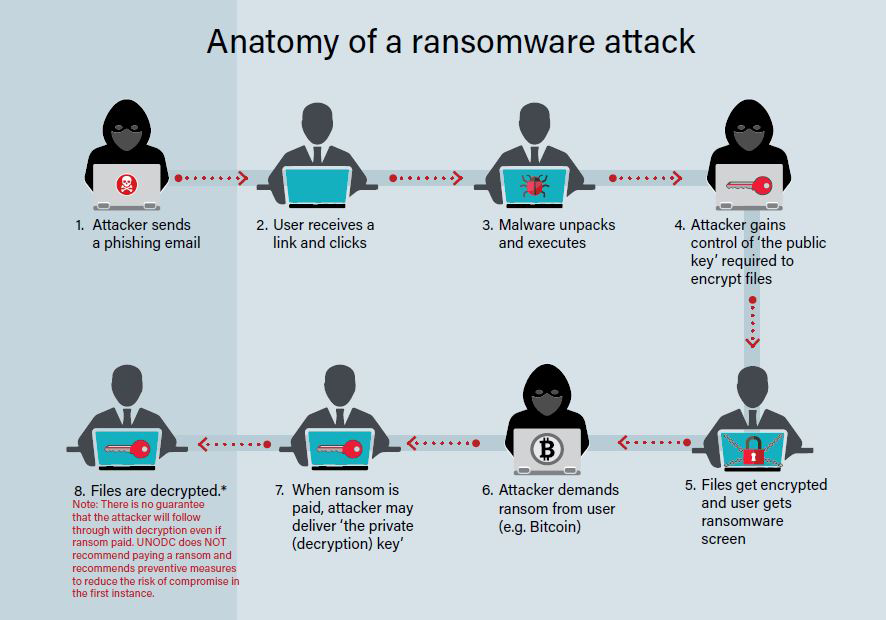
Ransomware Attack :
-
- What was taken? Access to and encryption of data until a ransom is paid.
- Exploits: Usually initiated through phishing emails or exploiting vulnerabilities in software.
- Prevention: Regularly backup data, use robust endpoint security software, and educate employees about the dangers of opening suspicious attachments or links.
Distributed Denial of Service (DDoS) Attack:
-
- What was taken? Temporarily disrupts a website or online service.
- Exploits: Overwhelms the target with a flood of traffic from multiple sources.
- Prevention: Implement DDoS mitigation tools, maintain redundancy in systems, and employ monitoring for unusual traffic patterns.
Insider Threat:
-
- What was taken? Sensitive information or malicious actions by employees or contractors.
- Exploits: Exploitation of internal access or data theft.
- Prevention: Implement strong access controls, monitoring, and auditing of user activity, and establish clear security policies and procedures.
Zero-Day Vulnerability Exploits:
-
- What was taken? Unauthorized access to systems or data.
- Exploits: Attackers target vulnerabilities in software that are unknown to the vendor.
- Prevention: Stay informed about software updates and patches, use intrusion detection systems, and employ good vulnerability management practices.

