Is potato good?

Is potato good for Cockatiels bird?

Is potato good for Cockatiels bird or no, we can say Potatoes are not recommended as a primary food for cockatiels or most other pet birds. While potatoes are a staple in human diets, they are not an ideal choice for birds like cockatiels because they are high in starch and carbohydrates and lack the essential nutrients that birds need.

Cockatiels require a balanced diet that includes a variety of fruits, vegetables, seeds, and pellets specifically formulated for their nutritional needs. Potatoes can be difficult for birds to digest due to their starch content, and feeding them in excess can lead to nutritional imbalances. Furthermore, some potato varieties can be toxic to birds because they contain compounds called solanines, which are harmful when consumed in large amounts.

If you want to provide your cockatiel with a healthy and balanced diet, it’s best to offer them foods that are safe and suitable for their nutritional requirements. You can include a variety of vegetables like carrots, peas, and leafy greens, as well as fruits like apples, pears, and berries in their diet. Additionally, providing a high-quality cockatiel pellet as a primary source of nutrition is recommended.

Always consult with an avian veterinarian or a bird specialist to ensure you are meeting your cockatiel’s specific dietary needs and to discuss any concerns about their health and nutrition.


Certainly! In addition to a balanced diet, there are some general guidelines you can follow to ensure the well-being of your cockatiel:

Fresh Water:

Always provide fresh, clean water for your cockatiel. Change the water daily to prevent bacterial growth.

Pellets:

High-quality cockatiel pellets are formulated to provide essential nutrients. They should make up a significant portion of your bird’s diet.

Variety in Vegetables and Fruits:

Offer a diverse range of fresh vegetables and fruits to provide essential vitamins and minerals. Examples include carrots, spinach, kale, apples, berries, and more.

Seeds:

While seeds can be part of the diet, they should not be the main component. Too many seeds can lead to nutritional imbalances. Use them as treats or as a smaller part of the overall diet.

Avoid Toxic Foods:

Some foods are toxic to birds. Avoid giving your cockatiel avocado, chocolate, caffeine, alcohol, onions, garlic, and foods high in salt or sugar.

Grit:

Contrary to popular belief, cockatiels do not require grit for digestion, and excessive grit consumption can lead to health issues. If they are on a balanced diet, grit is generally unnecessary.

Fresh Greens:

Offer fresh, bird-safe branches or leaves from non-toxic trees. This provides mental stimulation and encourages natural behaviors like chewing.

Limit Processed Foods:

Minimize the intake of processed and high-fat foods. Human snacks and foods often contain ingredients that may not be suitable for birds.

Regular Vet Check-ups:

Schedule regular check-ups with an avian veterinarian to monitor your cockatiel’s health, discuss any dietary concerns, and address potential issues early.

Monitor Weight:

Keep an eye on your cockatiel’s weight. Obesity can be a problem in pet birds, and sudden weight loss or gain may indicate health issues.

Remember that individual birds may have different preferences and nutritional needs. It’s essential to observe your cockatiel’s behavior and adjust its diet accordingly. If you have specific concerns or questions about your bird’s diet, consult with an avian veterinarian for personalized advice.
 

You can check more videos in our Youtube Channel.

If you want to learn more, you can check other Posts

Sample Exams (Type of Attack, Hat)

Sample Exams (Type of Attack, Hat)

Sample Exams of Cybersecurity

In these series we have some “Sample Exams of Cybersecurity”, “Practice Cybersecurity Examinations”, “Cybersecurity Test Previews” and “Mock Cybersecurity Tests”


Type of Attack:

1. Hacktivists:

These are individuals or groups who engage in hacking activities to promote a social or political agenda. Their goal is to raise awareness or effect change through their actions.

2. Cybercriminals:

Cybercriminals are motivated by financial gain. They may engage in activities like stealing personal information, credit card data, or conducting ransomware attacks to demand money from victims.

3. Nation-State Actors:

Governments and state-sponsored groups conduct cyber-espionage and cyber-attacks to gain a competitive advantage, steal sensitive information, or disrupt the infrastructure of other nations.

4. Insiders:

Insiders are individuals within an organization who misuse their authorized access to commit cybercrimes. They can be current or former employees, contractors, or business partners.

5. Script Kiddies:

These are individuals with limited technical skills who use pre-written scripts or tools to launch attacks. They often do it for the thrill rather than any specific goal.

6. Organized Crime Groups:

Some cybercriminals operate as part of organized crime networks. They may engage in activities like credit card fraud, identity theft, or cyber-extortion.

7. Phishers:

Phishers use social engineering techniques to trick individuals into revealing sensitive information, such as usernames, passwords, and financial data. They often send fraudulent emails or messages that are from legitimate sources.

8. Malware Authors:

Individuals who create and distribute malicious software, such as viruses, Trojans, and ransomware. Their goal is to infect computers and steal data or disrupt operations.

9. Advanced Persistent Threat (APT) Actors:

APT groups are typically nation-state or highly skilled attackers who use sophisticated, long-term attacks to infiltrate and maintain access to a target network. Their primary goals are espionage or data theft.

10. Hackers for Hire:

These are individuals or groups that offer hacking services to the highest bidder. They can be hired for various purposes, including corporate espionage, data theft, or taking down websites.

11. Data Brokers:

Data brokers gather, compile, and sell personal information and data obtained from various sources. While not directly engaging in hacking, their activities can indirectly support cybercrime by providing stolen data to other attackers.

12. Extortionists:

Extortionists threaten to expose sensitive information or launch attacks on a target unless a ransom is paid. Ransomware attacks are a common method used by extortionists.

13. Cybersecurity Researchers (Ethical Hackers):

While not attackers in the malicious sense, ethical hackers, or white hat hackers, actively seek vulnerabilities in systems and networks to help organizations strengthen their security.

14. Unintentional Threats:

Sometimes, individuals may inadvertently pose a security threat through their actions, such as falling victim to phishing attacks or using weak passwords. They are not malicious attackers but can inadvertently compromise security.

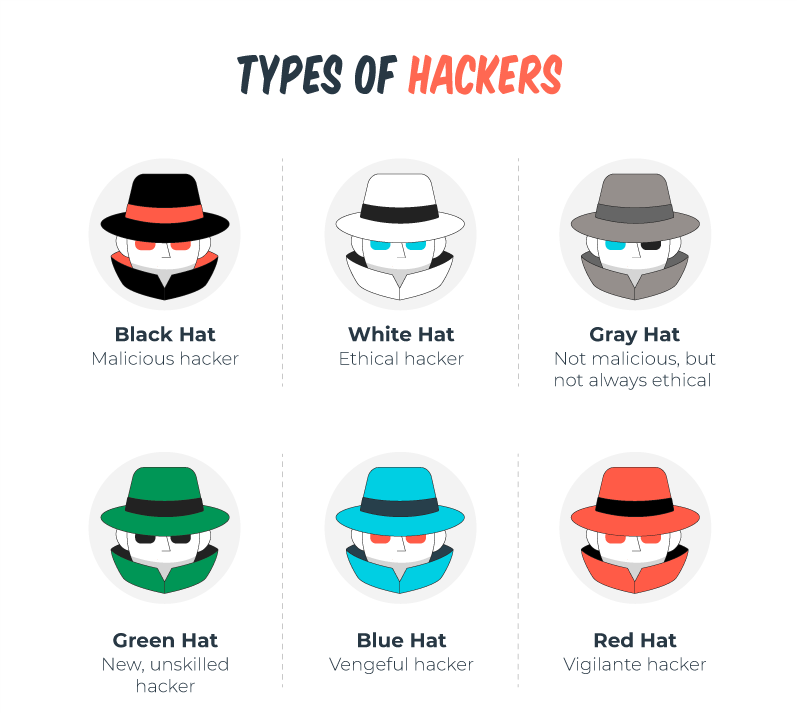
What Color Is My Hat of Attackers on cyber security?


White Hat:

White hat hackers are ethical hackers who work to identify and fix security vulnerabilities in systems. They are often employed by organizations to conduct penetration testing and security assessments to improve security.

Black Hat:

Black hat hackers are malicious hackers who engage in cybercriminal activities, such as hacking for financial gain, stealing sensitive data, or causing harm to computer systems and networks.

Gray Hat:

Gray hat hackers fall somewhere in between white hat and black hat hackers. They may discover and disclose security vulnerabilities without authorization but without malicious intent. However, their actions may still be legally questionable.

Red Team:

A red team is a group of skilled professionals who simulate cyberattacks to test the security of an organization’s systems. They can be either internal or external to the organization.

Blue Team:

Blue team refers to the defenders of a network or system. They work to prevent and mitigate cyberattacks and respond to security incidents.


You can find other learning for Security by clicking here.

Sample Exams (Malware, confidentiality, McCumber Cube)

Sample Exams (Malware, confidentiality, McCumber Cube)

Sample Exams of Cybersecurity

In these series we have some “Sample Exams of Cybersecurity”, “Practice Cybersecurity Examinations”, “Cybersecurity Test Previews” and “Mock Cybersecurity Tests”

Which of the following would be classified as personal data? (1,2,3)

You can find other learning for Security by clicking here.

Sample Exams (Improved Security)

Sample Exams (Improved Security)

Sample Exams of Cybersecurity

In these series we have some “Sample Exams of Cybersecurity”, “Practice Cybersecurity Examinations”, “Cybersecurity Test Previews” and “Mock Cybersecurity Tests”

What organizations need to invest in improved security practices?
  • investing in cybersecurity training for all staff so that they are aware of and able to spot a cyber attack
  • enforcing two factor authentication for employees accessing files and applications that contain sensitive data
  • maintaining log files and ongoing monitoring to identify anomalous behavior that might indicate a data breach
  • storing the passwords of customers using a combination of salting and robust hashing algorithms
  • separating cloud-based resources from the public Internet into an isolated private network segment
  • granting employees access to personal data and internal systems only via a secure VPN connection.
Data Breach:
    • What was taken? Personal information, financial data, or sensitive company data.
    • Exploits: Typically involve phishing attacks, malware, or vulnerabilities in web applications.
    • Prevention: Employ strong access controls, regular security training for employees, and keep software and systems up to date. Implement encryption and multi-factor authentication.
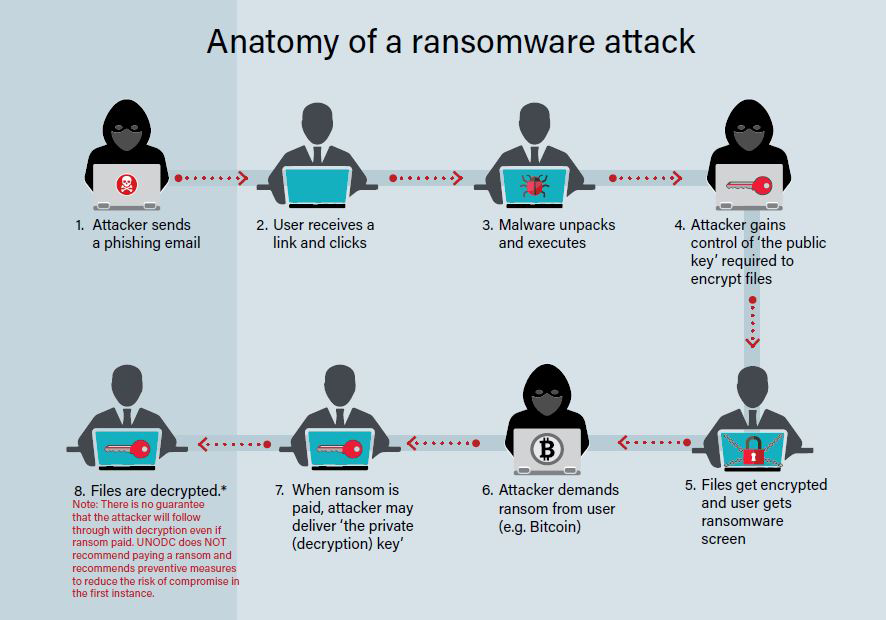
Ransomware Attack :
    • What was taken? Access to and encryption of data until a ransom is paid.
    • Exploits: Usually initiated through phishing emails or exploiting vulnerabilities in software.
    • Prevention: Regularly backup data, use robust endpoint security software, and educate employees about the dangers of opening suspicious attachments or links.
Distributed Denial of Service (DDoS) Attack:
    • What was taken? Temporarily disrupts a website or online service.
    • Exploits: Overwhelms the target with a flood of traffic from multiple sources.
    • Prevention: Implement DDoS mitigation tools, maintain redundancy in systems, and employ monitoring for unusual traffic patterns.
Insider Threat:
    • What was taken? Sensitive information or malicious actions by employees or contractors.
    • Exploits: Exploitation of internal access or data theft.
    • Prevention: Implement strong access controls, monitoring, and auditing of user activity, and establish clear security policies and procedures.
Zero-Day Vulnerability Exploits:
    • What was taken? Unauthorized access to systems or data.
    • Exploits: Attackers target vulnerabilities in software that are unknown to the vendor.
    • Prevention: Stay informed about software updates and patches, use intrusion detection systems, and employ good vulnerability management practices.


You can find other learning for Security by clicking here.

Can eat banana?

Can eat banana?

Can Cockatiels eat banana?

Yes, cockatiels can eat bananas in moderation. Bananas are safe for cockatiels to consume and can be a healthy treat when given in appropriate amounts. They are a good source of vitamins, minerals, and dietary fiber.

However, like with any treat, it’s important to remember a few key points:

Moderation:

While bananas are safe, they are also high in natural sugars. Too much sugar can be unhealthy for birds. Offer small, bite-sized pieces occasionally, not as a primary food source.

Variety:

A healthy diet for a cockatiel should consist primarily of high-quality pelleted bird food, supplemented with fresh vegetables, fruits, and occasionally seeds.

Preparation:

Make sure to wash the banana thoroughly and remove the peel. You can cut the banana into small, manageable pieces for your cockatiel to eat.

Freshness:

Only offer fresh bananas. Remove any uneaten portions from the cage after a few hours to prevent spoilage.

Watch for Allergies:

Just like humans, some birds might have sensitivities or allergies to certain foods. Watch for any adverse reactions after introducing bananas for the first time.

Remember that every bird is different, and preferences and tolerances can vary. If you’re unsure about introducing new foods into your cockatiel’s diet, it’s always a good idea to consult with an avian veterinarian. They can provide you with personalized advice based on your bird’s specific needs and health considerations.


You can check more videos in our Youtube Channel.

If you want to learn more, you can check other Posts