Quebec City, or Ville de Québec in French, is the capital city of the province of Quebec in Canada. It is situated in the eastern part of the province along the St. Lawrence River and is known for its rich history, European charm, and stunning architecture.
The city’s historic district, Old Quebec (Vieux-Québec), is a UNESCO World Heritage site and features cobblestone streets, historic buildings, and fortifications dating back to the 17th century.
Within Old Quebec, notable attractions include the iconic Château Frontenac, a grand hotel with breathtaking views of the city and river, as well as Place Royale, the Petit-Champlain district, and the Citadelle of Quebec.
Quebec City
It is renowned for its festivals, including the Winter Carnival (Carnaval de Québec), one of the largest winter festivals in the world, celebrating winter sports, ice sculptures, and Quebecois culture. The city also offers a vibrant culinary scene, showcasing French-Canadian cuisine and numerous cafes, bistros, and restaurants.
Rich in history and culture, Quebec City serves as a hub for art, music, and heritage, attracting tourists from around the globe to explore its beauty and immerse themselves in its unique blend of European and North American influences.
It, located in the Canadian province of Quebec, has a rich and diverse history that spans centuries. Here’s an overview:
Early History:
Indigenous Settlements: Before the arrival of Europeans, the area was inhabited by various Indigenous peoples, notably the Huron-Wendat, the Iroquois, and the Algonquin.
European Exploration and Colonization:
Jacques Cartier: In 1534, French explorer Jacques Cartier arrived in the region, claiming it for France. He established a fort at the site of present-day Quebec City in 1535.
Samuel de Champlain: In 1608, Samuel de Champlain founded Quebec City, establishing it as a fur trading post and the capital of New France. The city’s strategic location along the St. Lawrence River contributed to its growth as a trading hub.
Colonial Period:
Conflict between France and England: It became a focal point during various conflicts between France and England for control over North America. The British captured Quebec City in 1629 but later returned it to France via the Treaty of Saint-Germain-en-Laye in 1632.
Battle of the Plains of Abraham: In 1759, during the Seven Years’ War, British forces, led by General James Wolfe, defeated the French under General Louis-Joseph de Montcalm on the Plains of Abraham, leading to the fall of Quebec City. This pivotal battle marked the end of French rule in Canada.
British Rule: Following the Treaty of Paris in 1763, which ended the Seven Years’ War, Quebec City and the rest of New France came under British control.
19th Century:
Constitutional Changes: After the American Revolution, many Loyalists (those loyal to the British Crown) settled in Quebec City and the surrounding areas. In 1791, the British Parliament passed the Constitutional Act, dividing Quebec into Upper and Lower Canada, with Quebec City as the capital of Lower Canada.
Political Unrest: Throughout the 19th century, tensions between English-speaking and French-speaking residents grew, leading to political unrest and calls for reform and representation.
Confederation and Modern Era:
Confederation: In 1867, Quebec City hosted the Quebec Conference, where discussions and agreements on Confederation took place. This resulted in the formation of the Dominion of Canada on July 1, 1867.
Cultural and Economic Development: Quebec City continued to grow as a cultural, economic, and political center. Efforts to preserve its historic sites, such as Old Quebec, led to its designation as a UNESCO World Heritage Site in 1985.
Contemporary Era:
Political Significance: Quebec City remains a significant political and cultural center within Quebec province, hosting important political events and cultural festivals.
Tourism and Economy: Its historic charm, fortified walls, and numerous landmarks attract millions of tourists each year. Additionally, industries like technology, tourism, and services contribute to the city’s economy.
Quebec City’s history is deeply intertwined with both French and British influences, contributing to its unique cultural heritage that remains an integral part of Canada’s history.
Observing a sunflower stem under a microscope can reveal fascinating details about its internal structure. Typically, the stem of a sunflower consists of various tissues arranged in a specific pattern.
Under a microscope, you might observe:
Epidermis: The outermost layer of cells that covers the stem. These cells help protect the inner tissues and regulate water loss,
Cortex: Beneath the epidermis, you’ll find the cortex, a region composed of parenchyma cells that provide support and store nutrients,
Vascular Bundles: These are scattered throughout the stem and are responsible for transporting water, nutrients, and sugars. They consist of xylem (responsible for water and mineral transport) and phloem (responsible for the transport of sugars produced in the leaves to other parts of the plant),
Cambium: In dicot stems like sunflowers, you might find a layer of actively dividing cells called the cambium. This layer is responsible for secondary growth, leading to the formation of wood in trees,
Pith: The central region of the stem consists of pith, which is made up of parenchyma cells and serves as a storage tissue.
Under higher magnification, you might also observe cell walls, cell organelles (such as chloroplasts in some cells), and other details that contribute to the stem’s function and structure.
To observe the sunflower stem under a microscope, you’ll need to carefully prepare a thin cross-section of the stem. This involves slicing a very thin piece of the stem and placing it on a microscope slide, adding a drop of water or a staining solution if necessary, and covering it with a cover slip before placing it under the microscope for observation.
Adjusting the magnification and focus will help in getting a clear view of the different structures within the stem.
When observing a rice stem under a microscope, you can observe various structures and tissues that contribute to the overall plant function. Here are some of the key components and structures you might see:
Epidermis:
The outer layer of cells covering the stem. It acts as a protective barrier against physical damage and pathogens.
Vascular bundles:
These are bundles of xylem and phloem tissues responsible for transporting water, nutrients, and sugars throughout the plant. Xylem transports water and minerals from the roots upwards, while phloem transports sugars produced in the leaves to other parts of the plant.
Xylem:
This tissue is composed of vessels and tracheids that transport water and dissolved minerals from the roots to the rest of the plant. It appears as elongated cells with various patterns.
Phloem:
Made up of sieve tubes and companion cells, the phloem transports organic nutrients (such as sugars) produced during photosynthesis to other parts of the plant. Under the microscope, phloem cells might appear as elongated cells with a different structure compared to xylem.
Parenchyma cells:
These are thin-walled, living cells that make up the ground tissue of the stem. They function in storage, photosynthesis, and support.
Collenchyma and sclerenchyma cells:
These provide mechanical support to the plant. Collenchyma cells have thicker cell walls and provide flexible support, while sclerenchyma cells have rigid, thick walls, and provide more structural support.
Meristematic tissues:
These are regions of actively dividing cells where growth occurs. In the stem, you might see the apical meristem (at the tip of the stem) or lateral meristems (responsible for secondary growth).
Under a microscope, the arrangement, shape, size, and patterns of these cells and tissues would be visible, allowing for a detailed study of the internal structure of a rice stem and its functionality. Staining techniques or specialized microscopy methods can enhance specific features or tissues for better observation and analysis.
Flash Man is a character from the classic video game series “Mega Man” developed by Capcom. He is one of the Robot Masters created by the nefarious Dr. Wily. Flash Man made his first appearance as a boss character in “Mega Man 2,” which was released for the Nintendo Entertainment System (NES) in 1988.
Flash Man is known for his ability to manipulate time using his Time Stopper weapon. This weapon allows him to briefly freeze time, giving him an advantage during battles. In his stage, players navigate through various obstacles and enemies before facing Flash Man in a boss battle.
Defeating Flash Man grants Mega Man the Time Stopper ability, which can be used against other Robot Masters. Flash Man’s weakness is typically the “Metal Blade” weapon obtained from Metal Man in the game, making it easier for players to defeat him.
The character has become an iconic part of the Mega Man series, remembered for his time-based abilities and challenging boss fight.
Building a friendship with a Cockatiel takes patience, consistency and a gentle approach.
Here are some steps to follow.
Give your Cockatiel time to get used to you
When you first bring your Cockatiel home, give it a few days to settle into its pristine environment. After a few days, start spending time with it regularly, but let it come to you on its terms.
Offer treats
Offer your Cockatiel treats, such as Millet, fruit and vegetables to show that you are a source of positive reinforcement. Be sure to offer treats in a consistent manner, such as at the same time every day.
Talk to your Cockatiel
Cockatiels are social creatures and enjoy hearing human voices. Talk to your Cockatiel in a gentle and reassuring tone.
Offered toys and purchases
Provide your Cockatiel with toys and perches to keep it stimulated and active. Spend time playing with your Cockatiel, using its toys to help build trust.
Train your Cockatiel
Cockatiels are intelligent birds and can be trained to do simple tricks such as stepping onto your hand. Training can help build a bond between you and your Cockatiel.
Be patient
Building a friendship with a Cockatiel takes time and patience. Respect your cockatiels boundaries and never force it to interact with you.
By following these steps, you can build a trusting and friendly relationship with your Cockatiel.
(Adversarial Tactics, Techniques, and Common Knowledge)
is a framework developed by MITRE Corporation, a not-for-profit organization dedicated to solving problems for a safer world. ATT&CK is a knowledge base that categorizes the tactics, techniques, and procedures (TTPs) used by adversaries or attackers during cyber intrusions.
The framework provides a comprehensive understanding of how cyber adversaries operate by organizing their behaviors into a matrix. This matrix consists of various tactics that represent high-level objectives an attacker may have (such as initial access, execution, persistence, privilege escalation, etc.) and techniques that represent specific methods or actions used to achieve those objectives.
Each technique is associated with real-world examples of how attackers have historically carried out cyber-attacks. The goal of ATT&CK is to assist organizations in improving their cyber defenses, threat detection, and response capabilities by mapping their security measures to the known tactics and techniques used by adversaries.
It’s widely used in cybersecurity for several purposes, including threat intelligence, red teaming, blue teaming, security assessments, and improving security posture by identifying and mitigating potential attack vectors based on known adversary behaviors. The framework is continuously updated and expanded to reflect the evolving landscape of cyber threats and attack methodologies.
Here are some examples of techniques related to Initial Access in the MITRE ATT&CK framework:
Spear phishing Attachment (T1566.001):
Attackers send tailored emails with malicious attachments to trick users into opening them, leading to the execution of malicious code.
Spear phishing Link (T1566.002):
Attackers send tailored emails containing links to malicious websites or resources to trick users into clicking, leading to exploitation or malware installation.
Valid Accounts (T1078):
Attackers use previously obtained credentials, such as stolen or purchased credentials, to gain unauthorized access.
External Remote Services (T1133):
Attackers exploit externally accessible services, such as VPNs or web services, to gain initial access to a network.
Exploit Public-Facing Application (T1190):
Attackers exploit vulnerabilities in public-facing applications, such as web servers, to gain access to the targeted network.
Drive-by Compromise (T1189):
Attackers compromise a legitimate website to host and deliver malicious content to visitors’ systems.
Phishing (T1566):
Attackers send deceptive communications (email, SMS, etc.) to trick individuals into divulging sensitive information or performing actions that compromise security.
Supply Chain Compromise (T1195):
Attackers target suppliers or vendors to gain access to their networks, which in turn could provide access to the targeted network.
These are just a few examples; the MITRE ATT&CK framework covers a wide array of tactics and techniques used by adversaries during different stages of a cyberattack. Each technique may have various sub-techniques and mitigations associated with it, providing a comprehensive understanding of potential threats and appropriate defenses.
You can find other learning for Security by clicking here.
What should I give the Cockatiel to breed faster ?
Breeding cockatiels involves creating an optimal environment and providing the necessary care rather than attempting to speed up the process artificially. Breeding birds require a balanced diet, suitable housing, and a comfortable setting to encourage natural breeding behavior. Here are some tips to help create a conducive environment for your cockatiels to breed:
Balanced diet:
Provide a nutritious and varied diet to ensure the birds are healthy and in optimal breeding condition. This includes a high-quality seed mix supplemented with fresh fruits, vegetables, and occasional protein sources like boiled egg or mealworms. Consult with an avian veterinarian or an experienced breeder for specific dietary recommendations.
Suitable housing:
Provide a spacious cage or an aviary that allows the birds to fly and move around comfortably. Ensure the cage has appropriate perches, nesting boxes, and privacy areas for breeding. The nesting box should have a suitable size and be made of safe materials.
Lighting and temperature:
Cockatiels require a consistent and appropriate photoperiod to stimulate breeding behavior. Maintain a natural light cycle of 12-14 hours of light and 10-12 hours of darkness. Additionally, ensure the temperature in the breeding area is within the optimal range for cockatiels (around 70-80°F or 21-27°C).
Environmental enrichment:
Provide plenty of toys, branches, and other environmental enrichment to keep the birds mentally stimulated and physically active. This can help simulate natural behavior and encourage breeding instincts.
Pairing compatibility:
Ensure you have a compatible breeding pair of cockatiels. Introduce the male and female gradually and observe their behavior for signs of compatibility. If they do not get along or show aggression, it may be necessary to try different pairings.
Patience and observation:
Breeding cockatiels naturally takes time and cannot be rushed. Provide a peaceful environment, observe the birds for signs of courtship and mating behavior, and be patient. Trying to force breeding may cause stress and be counterproductive.
It’s important to note that breeding birds requires experience, knowledge, and careful consideration. If you are new to breeding cockatiels, it may be helpful to consult with an experienced aviculturist or a veterinarian who specializes in avian care to ensure the well-being of your birds throughout the breeding process.
Cockatiels are small parrots that have specific dietary needs to stay healthy. Some Dangerous Foods can be harmful to them due to their unique digestive systems and sensitivities.
Here are some Dangerous Foods to avoid feeding to cockatiels:
Avocado:
Avocado contains a substance called Persin, which is toxic to birds and can lead to serious health issues or even death.
Chocolate:
Chocolate is toxic to many animals, including birds. It contains theobromine, which can be harmful.
Caffeine:
Avoid giving your cockatiel any caffeinated beverages or foods, as caffeine is a Dangerous Foods for birds.
Onions and Garlic:
These foods can cause digestive issues and even damage to the red blood cells of birds.
High-Fat and High-Sugar Foods:
Foods like fried foods, sugary snacks, and salty foods should be avoided as they can lead to obesity and other health problems.
Processed Foods:
Foods that are high in additives, preservatives, and artificial colors or flavors are not suitable for cockatiels.
Salty Foods:
Excess salt is not good for cockatiels. Avoid feeding them salty snacks like chips or pretzels.
Fruit Pits and Seeds:
While some fruits are safe for cockatiels, avoid giving them fruits with pits (like peaches or cherries) and seeds from fruits like apples, as they can contain small amounts of cyanide.
Dairy Products:
Cockatiels are lactose intolerant and cannot properly digest dairy products.
Alcohol:
Alcohol is toxic to birds and should never be given to them.
Raw Beans and Legumes:
Uncooked beans and legumes contain toxins that can be harmful to birds. Make sure these foods are properly cooked if you want to offer them.
Unwashed or Contaminated Foods:
Make sure any fresh foods you offer to your cockatiel are thoroughly washed to remove pesticides and other contaminants.
Remember, the main part of a cockatiel’s diet should consist of a high-quality, pelleted bird feed. This should be supplemented with fresh fruits, vegetables, and occasional treats that are safe for them. Always do thorough research or consult with an avian veterinarian before introducing new foods into your cockatiel’s diet to ensure their safety and nutritional value.
In these series we have some “Sample Exams of Cybersecurity”, “Practice Cybersecurity Examinations”, “Cybersecurity Test Previews” and “Mock Cybersecurity Tests”
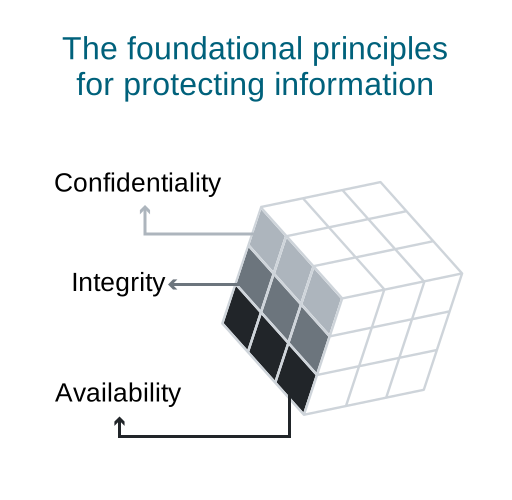
McCumber CUBE:
This could refer to a cybersecurity risk management framework developed by John McCumber, known as the McCumber Cube. It provides a structured way of understanding and managing security risks within an organization by considering three dimensions: confidentiality, integrity, and availability (often referred to as the CIA triad).
McCumber diagram:
In software engineering, the McCumber diagram is a graphical representation used to depict various dimensions of security in a system. It can display information regarding security attributes, vulnerabilities, threats, and countermeasures.
McCumber’s model or theories:
John McCumber is known for his contributions to cybersecurity and philosophy. He has written about the intersection of philosophy and technology, exploring the ethical and moral aspects of information security.
Cyberwarfare:
Cyberwarfare refers to the use of digital attacks, hacking, and other technological means to disrupt, damage, or gain unauthorized access to computer systems, networks, or information. The purpose of cyberwarfare can vary significantly based on the objectives of the parties involved. Here are some primary purposes or objectives associated with cyberwarfare:
National Security and Defense: Nations engage in cyberwarfare to protect their national security interests. This includes defending against cyber-attacks from other countries, safeguarding critical infrastructure (such as power grids, financial systems, and communication networks), and ensuring the security of military systems.
Espionage and Intelligence Gathering: Cyberwarfare is used for espionage purposes, allowing nations to gather intelligence on other countries, including government activities, military strategies, economic data, and technological advancements. This information can be used for strategic advantage or to stay informed about potential threats.
Political Influence and Manipulation: Some cyber operations aim to influence political processes, public opinion, or elections in other countries. This can involve spreading misinformation, manipulating social media, or breaching sensitive data to sway public sentiment or disrupt the political landscape.
Economic Warfare: Cyber-attacks can be used to sabotage or gain access to economic assets, trade secrets, intellectual property, or financial systems of other countries or corporations. Such attacks can cause significant economic damage or provide economic advantages to the attacking entity.
Military Operations and Warfare: Cyber capabilities are increasingly integrated into military strategies. They can be used to disrupt or disable enemy communication systems, command-and-control infrastructure, or weapon systems, creating advantages in traditional warfare scenarios.
Deterrence and Posturing: Nations may engage in cyber operations to highlight their capabilities, act as a deterrent against potential adversaries, or demonstrate their preparedness in the cyber domain. This serves to dissuade others from launching cyber-attacks or to signal the ability to retaliate effectively.
Non-state Actors and Ideological Motives: Some cyber-attacks are carried out by non-state actors, such as hacker groups or cybercriminals, for ideological reasons, financial gain, or to promote a specific agenda. These attacks might not be linked to state-sponsored cyberwarfare but can still cause significant disruptions.
It’s important to note that the landscape of cyberwarfare is complex and constantly evolving. Attribution of attacks, distinguishing between state and non-state actors, and the interconnected nature of cyberspace pose significant challenges in understanding and responding to cyber threats effectively. As technology advances, the purposes and methods of cyberwarfare will continue to evolve, requiring ongoing vigilance and adaptation in defensive and offensive strategies.
You can find other learning for Security by clicking here.
Is potato good for Cockatiels bird or no, we can say Potatoes are not recommended as a primary food for cockatiels or most other pet birds. While potatoes are a staple in human diets, they are not an ideal choice for birds like cockatiels because they are high in starch and carbohydrates and lack the essential nutrients that birds need.
Cockatiels require a balanced diet that includes a variety of fruits, vegetables, seeds, and pellets specifically formulated for their nutritional needs. Potatoes can be difficult for birds to digest due to their starch content, and feeding them in excess can lead to nutritional imbalances. Furthermore, some potato varieties can be toxic to birds because they contain compounds called solanines, which are harmful when consumed in large amounts.
If you want to provide your cockatiel with a healthy and balanced diet, it’s best to offer them foods that are safe and suitable for their nutritional requirements. You can include a variety of vegetables like carrots, peas, and leafy greens, as well as fruits like apples, pears, and berries in their diet. Additionally, providing a high-quality cockatiel pellet as a primary source of nutrition is recommended.
Always consult with an avian veterinarian or a bird specialist to ensure you are meeting your cockatiel’s specific dietary needs and to discuss any concerns about their health and nutrition.
Certainly! In addition to a balanced diet, there are some general guidelines you can follow to ensure the well-being of your cockatiel:
Fresh Water:
Always provide fresh, clean water for your cockatiel. Change the water daily to prevent bacterial growth.
Pellets:
High-quality cockatiel pellets are formulated to provide essential nutrients. They should make up a significant portion of your bird’s diet.
Variety in Vegetables and Fruits:
Offer a diverse range of fresh vegetables and fruits to provide essential vitamins and minerals. Examples include carrots, spinach, kale, apples, berries, and more.
Seeds:
While seeds can be part of the diet, they should not be the main component. Too many seeds can lead to nutritional imbalances. Use them as treats or as a smaller part of the overall diet.
Avoid Toxic Foods:
Some foods are toxic to birds. Avoid giving your cockatiel avocado, chocolate, caffeine, alcohol, onions, garlic, and foods high in salt or sugar.
Grit:
Contrary to popular belief, cockatiels do not require grit for digestion, and excessive grit consumption can lead to health issues. If they are on a balanced diet, grit is generally unnecessary.
Fresh Greens:
Offer fresh, bird-safe branches or leaves from non-toxic trees. This provides mental stimulation and encourages natural behaviors like chewing.
Limit Processed Foods:
Minimize the intake of processed and high-fat foods. Human snacks and foods often contain ingredients that may not be suitable for birds.
Regular Vet Check-ups:
Schedule regular check-ups with an avian veterinarian to monitor your cockatiel’s health, discuss any dietary concerns, and address potential issues early.
Monitor Weight:
Keep an eye on your cockatiel’s weight. Obesity can be a problem in pet birds, and sudden weight loss or gain may indicate health issues.
Remember that individual birds may have different preferences and nutritional needs. It’s essential to observe your cockatiel’s behavior and adjust its diet accordingly. If you have specific concerns or questions about your bird’s diet, consult with an avian veterinarian for personalized advice.